
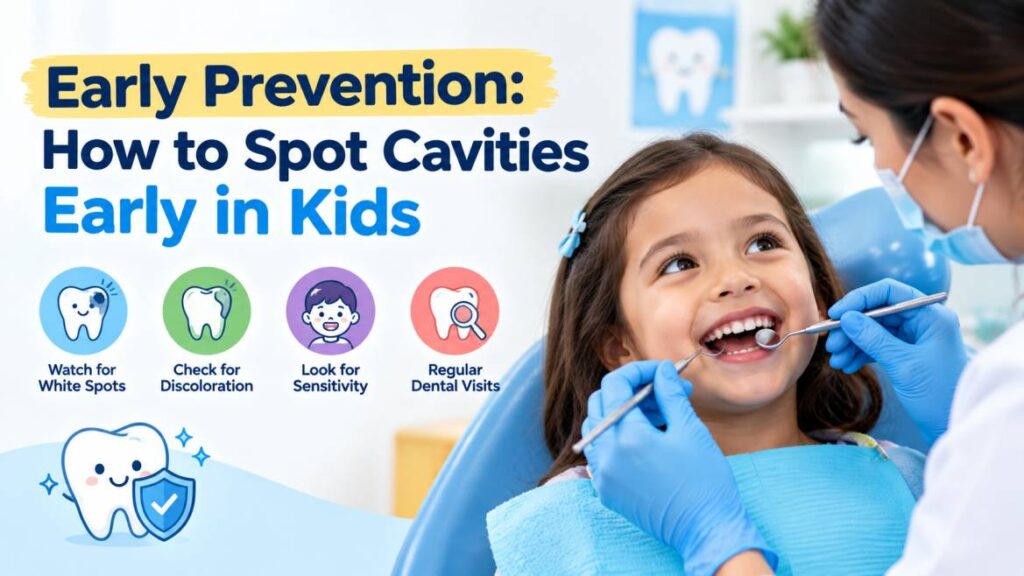
A child’s mouth is small, yet a lot goes on within it. The teeth look shiny, and the gums feel soft and warm. Cavities may begin without much warning, and you might not notice them immediately. You might not notice any damage for some time after they sit there.
Check for pale or chalky spots on the teeth. If your child says something hurts when they drink cold or eat sweets, take it seriously. Also note if they chew mostly on one side. These signs can be easy to miss. Still, they matter. Addressing dental issues early isn’t about being scared. It shows care, with all of your attention directed toward it.
Gentle Monitoring: Recognizing the First Cavities in Children
Watch closely when you see tiny changes. A light spot may be near the gum line. Sometimes there is a darker line inside a tooth groove. Brushing can help. Even so, your breath might smell a little sweet. These signs can be the start of trouble. Don’t ignore them. Check each day. Check your mouth daily, and in case of any emergency, visit the best dental clinic in Behala.
- Chalky white spots near the gumline may be an early sign of tooth problems, even before cavities appear.
- Small molars can have dark lines that hold sugar particles, and germs can gather nearby.
- Cold water or ice cream suddenly feels sharp, which can mean the enamel layer is getting thinner.
- If your child chews mainly on one side, it may be because they’re protecting a painful tooth.
- A brownish discoloration along the edges of the teeth suggests there may be a problem that requires attention.
- Stale breath that does not improve after brushing can mean bacteria are stuck between teeth.
- Swollen, red gums around one tooth may suggest there is swelling under the gumline.
Before the Soreness: Spotting Childhood Cavities Like a Pro
Every cavity seems to start with a little warning. Chalky spots show up first. You might see dark lines along the tooth. The person reacts with a wince as the ice cream touches them. That child’s mouth feels like a story, and it helps to look at it early. When a parent is attentive right away, things usually turn out less harsh. Before serious pain begins, you may notice a small, quiet sign. Watch closely. Trust your gut. Be the kind of careful observer your child’s smile needs.
- Chalky White Marks Along the Gumline:
You may see dull white spots where the enamel is losing strength. They may appear as a haze or as small spots on the tooth. If you identify them at an early stage, fluoride could aid in restoring the enamel. If you let it go, the spots may darken and develop into true decay that usually requires a filling.
- Brown Lines or Dark Spots on Back Teeth:
Molars have grooves where food is ground. Tiny bits of sugar and germs can get stuck in those lines. If you start to see brown or black spots in the grooves, decay may already be forming. Gently pass a clean finger over the spot. If it feels bumpy or your finger catches, you might be starting to form a cavity. Sealing compounds can be useful, especially if you apply them early.
- Trouble With Cold, Sweet, or Sour Feelings:
A kid may pull back from ice cream. They might also turn down cold drinks. Some kids will say the sweet tastes sting. Others call it a sharp feeling.
This can happen when the enamel is worn down near the top. The protective layer gets thinner, so cold and sweet foods bother the tooth. Do not ignore it. As time passes, the pain can intensify. Contact the dentist as soon as possible and schedule a checkup.
- Small Cavities, Actual Holes, or Dark Border Areas:
Sometimes you can see pits or openings in the tooth. If you notice brown margins and black spots, it could mean the tooth decay has already passed through the enamel. A filling is frequently part of the treatment plan. If you catch it earlier, you can prevent more complicated treatment later. Make sure you closely examine these spots and don’t miss anything.
Cavities are less likely when a parent is paying close attention. Spotting a small white mark today can mean fewer problems later. If a child reacts or flinches when something hurts, noticing it now can help avoid bigger dental work down the road.
Be gentle with what you do. Your child’s smile grows like a garden. Check it often, before stubborn issues start.
Same Patterns of Questions:
1. When should I begin looking for cavities on my child’s teeth?
Begin when the first tooth appears, usually around six months. Before that happens, use a soft cloth to clean the gums after meals. When teeth start coming in, make sure to check the mouth each day. Look for areas of pale white, spots that are brown or gray, or any blemish that appears different from the others. Identifying issues at an early stage can support healthier teeth as time goes on. You are the one who notices it first.
2. How often should my child visit a dentist?
Most kids go about every six months. It’s a good idea to follow the recommendations from your dentist as well. These visits are not only about cleaning. They are also a chance to catch issues early. Dentists use exams and, when needed, X-rays. Parents might not spot minor changes happening at home. If your child is at higher risk, the dentist may suggest more frequent visits. Keep the schedule steady. That way, decay is found before it turns into a bigger issue. Book the next one before you leave.
3. What foods and drinks put children at higher risk for cavities?
Sweet foods and drinks are a big reason. You’ll find sticky candy, dried fruit, sweets, soda, and juice in this selection. When kids have them a lot, mouth germs produce acid. That acid can slowly thin the enamel. Saliva also has less time to wash the acid away. Pick water for your drink instead of something sweet. Consider milk, cheese, nuts, and crunchy vegetables as helpful options.